

25 500€
35 000€

34 000€
29 000€

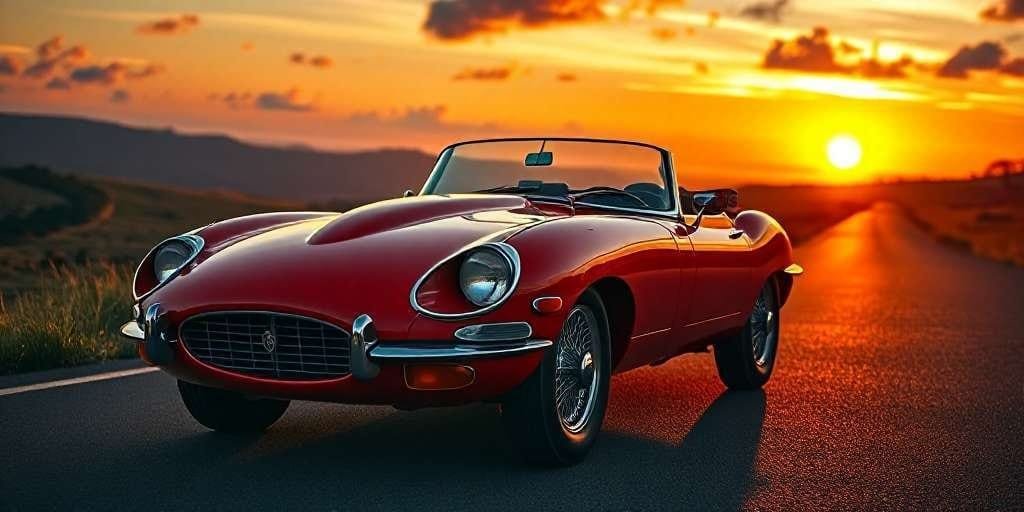
The Jaguar E-Type is a legendary British sports car that made its debut in the early 1960s. Known for its stunning design and performance, the E-Type quickly became a symbol of automotive excellence.
Produced by Jaguar Cars from 1961 to 1974, the E-Type has captivated car enthusiasts for decades. Its combination of style, speed, and innovation continues to impact car culture and remains highly sought after by collectors today.
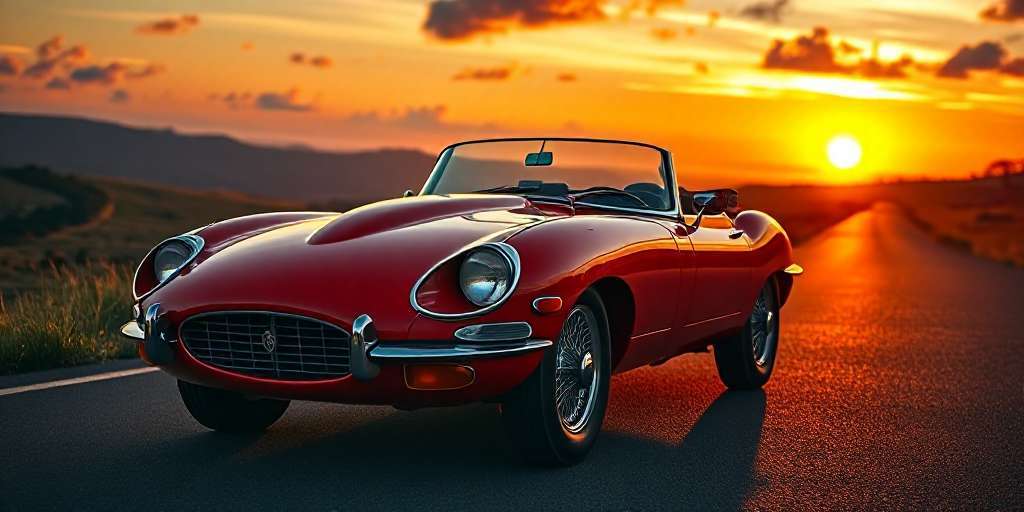
The journey of the Jaguar E-Type starts long before its iconic shape graced the roads. This section delves into the innovative ideas and historical contexts that led to its creation.
The roots of the E-Type can be traced back to Jaguar’s racing heritage, particularly the successful D-Type. This car dominated the 24 Hours of Le Mans in the mid-1950s, showcasing cutting-edge engineering and aerodynamics.
As the 1950s progressed, Jaguar envisioned a new model that would embody the performance and style that the D-Type represented. The focus was on blending a beautiful design with competitive speed, leading to the conception of the E-Type in the late 1950s. Engineers and designers worked diligently to create a car that would resonate with both motorsport fans and everyday drivers.
The world first saw the E-Type at the 1961 Geneva Motor Show, where it created an immediate sensation. This event marked a pivotal moment in automotive history, showcasing a vehicle that combined modern aesthetics with groundbreaking performance capabilities.
Jaguar’s team, led by Chief Engineer Walter Hassan and designer Malcolm Sayer, was determined to present not just a car, but a masterpiece. The E-Type featured a long hood and a sleek profile that exuded elegance. Its striking design and powerful six-cylinder engine captivated the audience, leading to an enthusiastic reception that extended well beyond the show.
One of the most memorable accolades for the E-Type came from Italian automotive legend Enzo Ferrari. He reportedly stated that it was “the most beautiful car ever made.” This statement underscored the E-Type’s impact not just as a vehicle, but as an artistic achievement in automotive design.
This endorsement from Ferrari, a formidable figure in the racing world, significantly bolstered the E-Type’s reputation. It captured the imagination of car enthusiasts around the globe and helped solidify its status as an icon of 1960s motoring culture.
The Jaguar E-Type is renowned not only for its aesthetic appeal but also for its remarkable engineering. The combination of cutting-edge design and innovative technology set a new standard in the automotive industry during its time.
Malcolm Sayer, an aerodynamics expert, played a pivotal role in the design of the E-Type. His contributions ensured that the car not only looked stunning but also benefited from an aerodynamic form that enhanced its performance. The E-Type’s sleek silhouette was developed with wind tunnel testing, allowing Sayer to refine its shape for optimal airflow.
The E-Type incorporated an innovative chassis design that was revolutionary for its time. Instead of the conventional ladder chassis, it utilized a monocoque structure combined with a separate subframe. This design choice reduced weight while enhancing rigidity and handling.
The E-Type was equipped with groundbreaking technology features that set it apart from its competitors. It included advancements that significantly improved driver control and safety. Notable features of the E-Type consisted of:
These elements not only contributed to the E-Type’s fame as a performance machine but also defined its engineering excellence that continues to be celebrated today.
The Jaguar E-Type was produced in multiple variants throughout its production years, reflecting advancements in technology and changes in consumer preferences. Each series introduced unique characteristics that distinguished it from the others.
The first series of the E-Type set a high standard for design and performance. It featured a distinct aesthetic and engineering innovations that captivated enthusiasts worldwide.
The initial models of Series 1 were equipped with a 3.8-liter inline-six engine. This configuration provided impressive power and acceleration, capable of going from 0 to 60 mph in just over seven seconds. The engine was paired with a four-speed manual transmission, offering drivers a thrilling experience on the road.
In 1965, Jaguar introduced a 4.2-liter version, further improving performance. This upgrade included notable enhancements such as:
The exterior design remained largely unchanged, ensuring the iconic appearance was preserved.
As the automotive industry began to prioritize safety and emissions standards, Series 2 reflected these changes while still maintaining the core essence of the E-Type.
To comply with new regulations, Series 2 models featured several modifications, including:
To adhere to environmental regulations, the engines underwent changes to reduce emissions. This included switching from SU carburetors to Zenith-Stromberg units in models sold in the United States, which, while sacrificing some power, allowed compliance with stricter laws.
The final series marked a significant evolution in the E-Type lineage with the introduction of the powerful V12 engine.
Series 3 was heralded for bringing the V12 engine into the E-Type family. The 5.3-liter V12 provided unparalleled performance and smoothness, boasting improved acceleration and higher top speeds. This engine became a hallmark of the series, solidifying its place in the performance sports car market.
With the V12 engine’s introduction, the design was slightly reworked to accommodate the larger power unit. Modifications included:
These enhancements ensured that the Series 3 maintained the sporty and elegant appearance that defined the E-Type.
The Jaguar E-Type made a significant impact not only on public roads but also in the competitive racing scene. Its adaptability and innovative design allowed it to compete effectively in various motorsports events, demonstrating its prowess as a performance vehicle.
The Low Drag Coupe, introduced in 1962, was designed to enhance aerodynamics. Its aerodynamic improvements provided a competitive edge, allowing it to achieve higher speeds than standard models. This variant was used successfully in racing events, showcasing the E-Type’s capabilities on the track.
Notably, the Low Drag Coupe was instrumental in various racing achievements, including good showings at prestigious events such as the 24 Hours of Le Mans. Its streamlined design not only made it a standout on the course but also contributed significantly to Jaguar’s reputation in motorsport during the 1960s.
The Lightweight E-Type was a key evolution in the pursuit of racing excellence. Initially, only 18 units were planned for production, with the aim of creating a model that was both fast and lightweight. The focus on weight reduction led to the use of aluminum panels, which contributed to improved speed and handling.
Between 1963 and 1964, a limited number of Lightweight E-Types were produced. Although only 12 were completed, these cars became highly sought after due to their exclusivity and performance. Many of these models saw action on the race circuit, carving a niche for themselves as track-ready sports cars. Their racing heritage is a testament to the engineering brilliance behind the E-Type design.
In 2014, Jaguar announced the continuation of the Lightweight E-Type, reviving this legendary model for a new generation. Six additional units were built, adhering closely to the original specifications. These continuation models were designed to both honor the legacy of the original E-Type and to meet modern standards.
Each of these models was a showcase of advanced technology blended with the classic design elements that enthusiasts cherish. The resurgence of the Lightweight E-Type models highlights Jaguar’s commitment to preserving its heritage while continuing to innovate within the automotive industry.
The Jaguar E-Type has made a significant mark in automotive history, not just for its engineering marvel but also for its cultural resonance. Its beauty and performance have captured the hearts of car enthusiasts and collectors alike, solidifying its status as an automotive icon.
Described by many as one of the most aesthetically pleasing vehicles ever created, the E-Type has received widespread acclaim for its design. Enzo Ferrari famously claimed it to be “the most beautiful car ever made.” This admiration is emblematic of the car’s sleek lines, Italian-inspired curves, and overall harmonious proportions. Its design has inspired countless automotive artists and designers, fostering a legacy that stretches far beyond its production years.
In the realm of collectible automobiles, the Jaguar E-Type stands out, attracting attention from enthusiasts and investors. Its rich history and iconic status contribute to its desirability, making it a sought-after item at auctions around the globe. Numerous E-Types have fetched staggering prices, showcasing the car’s elevated status in the collector’s market.
The E-Type’s rarity, especially the limited production variants, adds to its collectibility. Special models like the Lightweight E-Type are particularly coveted, often commanding premium prices due to their limited numbers and historical significance in motorsports.
Various collectors and enthusiasts celebrate the E-Type through restoration projects, showcasing their passion and commitment to preserving this legendary vehicle. With ongoing interest, the cultural significance of the E-Type is as strong today as it was at its inception, bridging generations of car lovers.
The legacy of the E-Type continues to thrive in the modern automotive landscape, blending vintage charm with cutting-edge technology. Recent initiatives by Jaguar have aimed to restore, celebrate, and even reinvent this classic vehicle in innovative ways.
In an effort to preserve the historical significance and craftsmanship of the E-Type, Jaguar Classic has launched various rebuilding projects. These initiatives focus on restoring E-Types to their original factory specifications, utilizing authentic parts and advanced restoration techniques. The goal is to maintain the vehicle’s legacy while ensuring that these classics can still be enjoyed on the road today.
As part of Jaguar’s commitment to sustainability and innovation, the E-Type Zero project was introduced. This groundbreaking initiative involves converting classic E-Types into fully electric vehicles, providing an eco-friendly twist to an icon.
Purchasing a Jaguar E-Type today involves navigating a unique marketplace filled with opportunities and challenges. As a highly desirable classic car, the E-Type attracts collectors and enthusiasts alike, resulting in a vibrant market for these iconic vehicles.
The current market for Jaguar E-Types is diverse, with numerous models available for sale across various platforms, including classic car dealerships, auction houses, and online marketplaces. Prices fluctuate significantly based on several factors:
When considering the purchase of a Jaguar E-Type, potential buyers should be aware of key features and issues pertinent to these classic cars. Important areas to examine include:
Additional factors such as resale value, parts availability for maintenance, and insurance considerations should also be taken into account when making a purchase decision. Owning a Jaguar E-Type can be an exciting venture, and thorough research will ensure a valuable addition to any collection.


